
Restoring Absorption When Treatment Areas Fail
Drain Field Repair in Brandon for wet areas, sewage odors, slow drainage, backups, and system distribution problems
When treated effluent stops absorbing into the soil and instead surfaces in your yard or backs up into your home, the drain field has lost its ability to disperse wastewater. Drain field repair in Brandon addresses problems ranging from crushed or clogged distribution lines that prevent effluent from reaching all absorption trenches, to biomat accumulation that seals soil pores and blocks infiltration, to root intrusion that obstructs lateral pipes, to isolated wet spots caused by a single damaged line rather than field-wide failure. Gulf Coast Septic, LLC diagnoses the specific failure mechanism because repair options depend entirely on whether the problem is mechanical obstruction in distribution components or irreversible soil saturation across the entire absorption area—one can be fixed, the other requires replacement.
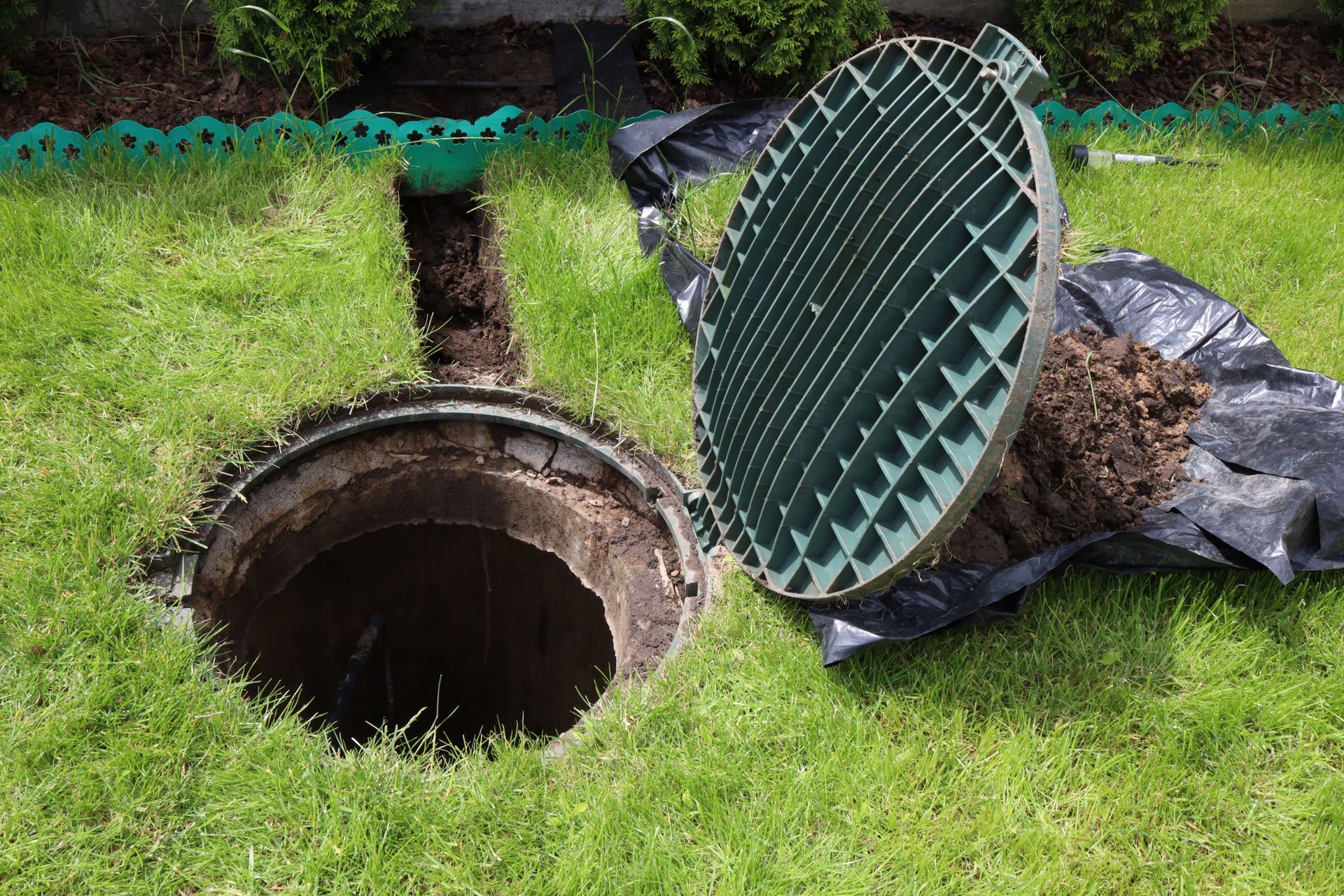
Diagnosis includes opening the distribution box to verify effluent is flowing from the tank, checking whether liquid is reaching all lateral lines equally or concentrating in one section, and excavating test points in the field to observe whether soil is saturated, whether pipes are intact, and whether tree roots have infiltrated joints. A field that shows wet areas only near one end may have a broken lateral that can be repaired by replacing that section, while a field with uniform saturation across all trenches has likely developed biomat thick enough that no repair restores absorption capacity.
Schedule an inspection to determine whether your drain field can be repaired or requires replacement.
What Repair Actually Addresses
Repairable problems include distribution boxes that have tilted and now send all effluent to one lateral instead of dividing it evenly, pipes crushed by vehicle traffic or settling soil, clogs caused by root infiltration or solids that escaped the tank due to a broken baffle, and isolated sections where gravel has compacted and reduced flow. Repairs involve excavating the affected area, replacing damaged pipe sections, clearing root obstructions, releveling distribution components, and restoring gravel bedding. These interventions work when the surrounding soil still has absorption capacity and the problem is isolated rather than systemic.
After successful repair, wet areas dry up, odors disappear, and household drains return to normal function. You'll notice that water no longer pools above the field after heavy use and that grass stops growing in the unnaturally dark green patches that indicate surfacing sewage. Gulf Coast Septic, LLC provides recommendations for preventing recurrence, such as avoiding the field with vehicles or removing trees whose root systems threaten lateral lines.
Some situations reveal that repair isn't viable: if excavation shows the soil is black, greasy, and completely saturated with biomat throughout the entire field depth, no amount of pipe replacement or line cleaning restores absorption because the soil itself has been sealed. At that point, the field needs replacement in a new location where soil remains unsaturated, a determination made during the diagnostic phase before repair work begins.
Answers to Questions About Field Repairs
Property owners dealing with drain field problems need clarity on what can be repaired, what symptoms indicate repairable versus terminal failure, and how the diagnostic process determines the appropriate solution. These answers explain the evaluation approach and realistic repair outcomes.
- What are the first signs that a drain field is failing? Early symptoms include drains that empty more slowly than usual, toilets that take longer to clear after flushing, wet or spongy areas above the field, sewage odors near the absorption area, and unusually lush grass growing in strips that correspond to lateral line locations. These indicate effluent is not absorbing properly and is either surfacing or backing up into the system.
- Can a drain field be repaired if tree roots have infiltrated the distribution lines? If roots have entered through joints or cracks but the surrounding soil still absorbs effluent, the damaged pipe section can be excavated, cleared, and replaced with intact pipe. However, if roots have filled lines throughout the field or if repeated cutting is required every few years, replacement in a root-free location becomes the more cost-effective long-term solution.
- How does biomat formation affect whether a drain field can be repaired? Biomat is a dense biological layer that forms on trench bottoms and soil interfaces when effluent with high solids content feeds bacterial growth; thin biomat is normal and even beneficial for filtration, but thick biomat seals soil pores and prevents absorption. If biomat is localized to one section, that area can sometimes be rehabilitated by resting the field and redirecting flow, but field-wide biomat saturation requires replacement.
- Why does my drain field show wet spots only after heavy household water use? Wet spots that appear only during high-flow events suggest the field has reduced capacity but hasn't completely failed—soil can absorb normal daily volume but becomes overwhelmed by laundry marathons or back-to-back showers. Reducing water use may extend field life temporarily, but the underlying capacity loss usually progresses until replacement becomes necessary.
- What does a drain field inspection involve when diagnosing failure? The inspection includes pumping the septic tank to ensure the field isn't backing up due to tank overfill, running water through the system to observe how quickly drains empty and whether effluent surfaces in the yard, opening the distribution box to check whether all laterals are receiving flow, and excavating test pits in the field to examine soil saturation and pipe condition. The findings determine whether repair or replacement is appropriate.
Gulf Coast Septic, LLC provides honest assessments of whether your drain field can be repaired or has deteriorated beyond the point where repairs offer lasting value. Call to arrange a diagnostic inspection that identifies the specific failure cause and the most cost-effective solution.